
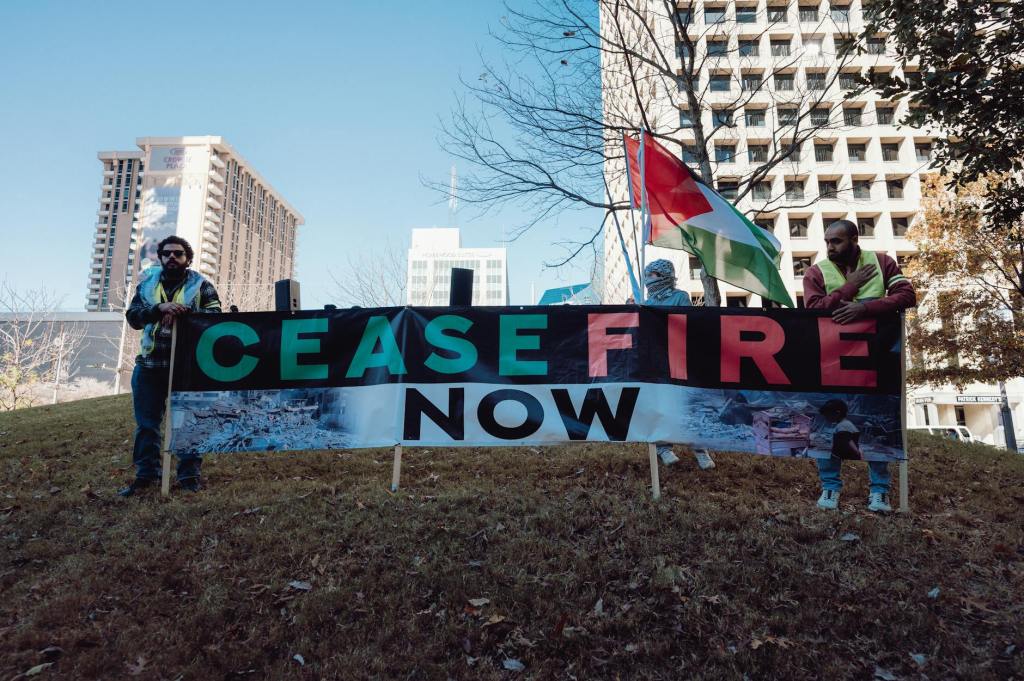
Is conflict inevitable within a two-state solution? There has been nearly constant conflict between Israel and Palestine since the partitioning of Palestine into two states in November 1947 (United Nations, n.d.). This would divide Palestine into one Jewish state and one Arab state and was rejected by the Arab world as unfair and in violation of the UN Charter. This led to Jewish militias launching an attack on Palestinian villages, displacing, and killing nearly half of the Palestinian population. Prior to the partitioning of the two states, Palestine existed as a multi-ethnic and multi-cultural land where Jewish Palestinians, Christian Palestinians, and Muslim Palestinians co-existed for thousands of years.
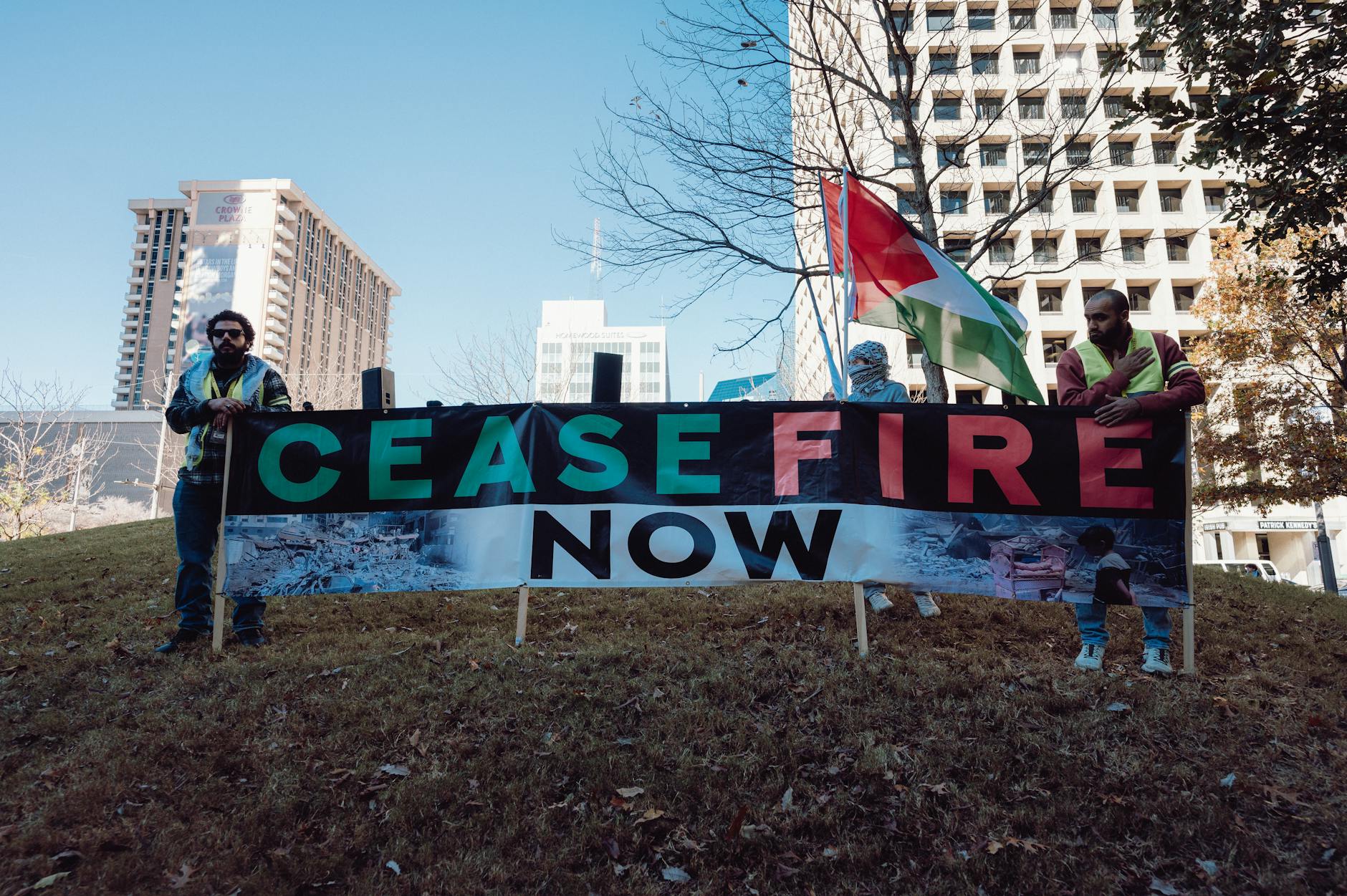
Palestine and Israel have been in continuous conflict ever since the UN partitioning, and the Social Identity Theory may lend insight as to the psychological reasons for the endless conflict. According to Tajfel and Turner (1979) the mere awareness of the presence of an out-group is sufficient to provoke intergroup competitive or discriminatory responses on the part of the in-group. Belonging to a group can be beneficial and create a sense of community but it can also become intermingled with an individual’s identity and create an internal bias to favor the group an individual belongs to and have a discriminatory perception of the “other” group (Pruitt and Kim, 2003).
Research studies involving social categorization have shown that separating individuals into groups even if arbitrary, will eventually become intermingled with group members individual identities. As group identities begin to become homogenized with individual identities such as ethnicities, religious beliefs, and political ideologies, attachment to the group becomes more intermingled. The existence of another group having a different identity will inevitably create competition and the formation of an “ingroup” and “outgroup” which makes it difficult to reconcile because it is difficult for two opposing groups to see their mutual aspirations for peace (Pruitt and Kim, 2003).
Overtime the Israeli and Palestinian Conflict has evolved from two groups with mutual aspirations of peace, into structural violence resulting from systemic marginalization of Palestinians. Access to land, resources and safety has been restricted over time furthering the separation of the identities of the two groups. According to Pruitt and Kim (2003) resistance to cooperation can occur when one party holds the concentrated power it wants to maintain, and the other party may not be able to employ persuasion strategies due to rage or fear. Rage because of injustices experienced can result in revenge, such as the violent events that took place on October 7th, 2023, that has since acted as the catalyst for justification for the tens of thousands of Palestinian lives lost. Pruitt and Kim (2003) explain that internal and external change agents may be necessary to set a goal of harnessing that energy of rage from both parties into cooperative action.
The power dynamics between the two groups developed through their separation and a homogenization of group identify with individual identities. The creation of the two-state partitioning has further separated Palestinians and Israelis over time with the co-mingling of group identity with individual identity to consequentially create structural violence. Structural violence has permeated psychologically and resulted in direct violence. The conflict has expanded over time and has increased in rigidity with the amount of violence endured and the restriction of resources and psychological damage. Currently, Israel and Palestine exist as a two-state territory, which has resulted in the endless conflict and disparaging gap in resources and power. A two-state solution would only address the surface interests of the parties and not their aspirations and require additional yielding from the Palestinians, which upholds the power imbalance that continues the cycle of withholding resources and structural violence. This may result in peace temporarily, but if the aspirations of the parties are not addressed, maintaining the existence of two separately defined groups will inevitably result in conflict between the in-group and the out-group.
Change agents that are dedicated to a lasting and peaceful resolution must consider the intersection of applicable conflict theories to address the aspirations of both parties as opposed to their interests. The Social Identity Theory further supports that a one-state solution may be necessary for lasting peace, and if there is the existence of another group that have conflicting goals, competition is inevitable. Realistic Conflict Theory suggests that there is always a tangible reason for conflict, and it is understood that land and resources are integral to the Israeli-Palestinian Conflict. A two-state solution developed for the parties as they currently exist would not address the systemic disparities between the two parties, which would result in frustration by comparing their differences that leads to aggression when the group differences are entangled with identity. Though there is systemic violence that would need to be addressed systematically, minimizing the separation between group identities by creating a shared identity, a one-state solution would create more interdependence and clearly defined mutual aspirations for peace increasing the likelihood for long-term success. Historically, the two-state solution has not been successful for Israel and Palestine, and creating a shared identity can work to repair the mistrust and fear through their shared love of the land. South Africa has maintained peace since ending apartheid through cooperative action from change makers, and by removing the barriers of group identity that separate us by establishing a single unified state, peace can be achieved by uniting through shared aspirations, culture and love of the land.
United Nations. (n.d.). About the Nakba. United Nations – UNISPAL. https://www.un.org/unispal/about-the-nakba/
Tajfel, H., & Turner, J. C. (1979). An integrative theory of intergroup conflict. In W. G. Austin, & S. Worchel (Eds.), The social psychology of intergroup relations (pp. 33-37). Monterey, CA: Brooks/Cole.
Pruitt, D.G. & Kim, S.H. (2003). Social conflict: Escalation, stalemate, and settlement (3rd ed.). McGraw Hill.
 The Proletariat Press
Leave a comment